The Complete 24-Hour Fasting Guide: Hour-by-Hour Expectations
A practical 24 hour fast guide covering preparation, what happens hour by hour, hydration, refeeding safely, and when longer fasts help—or cause harm.
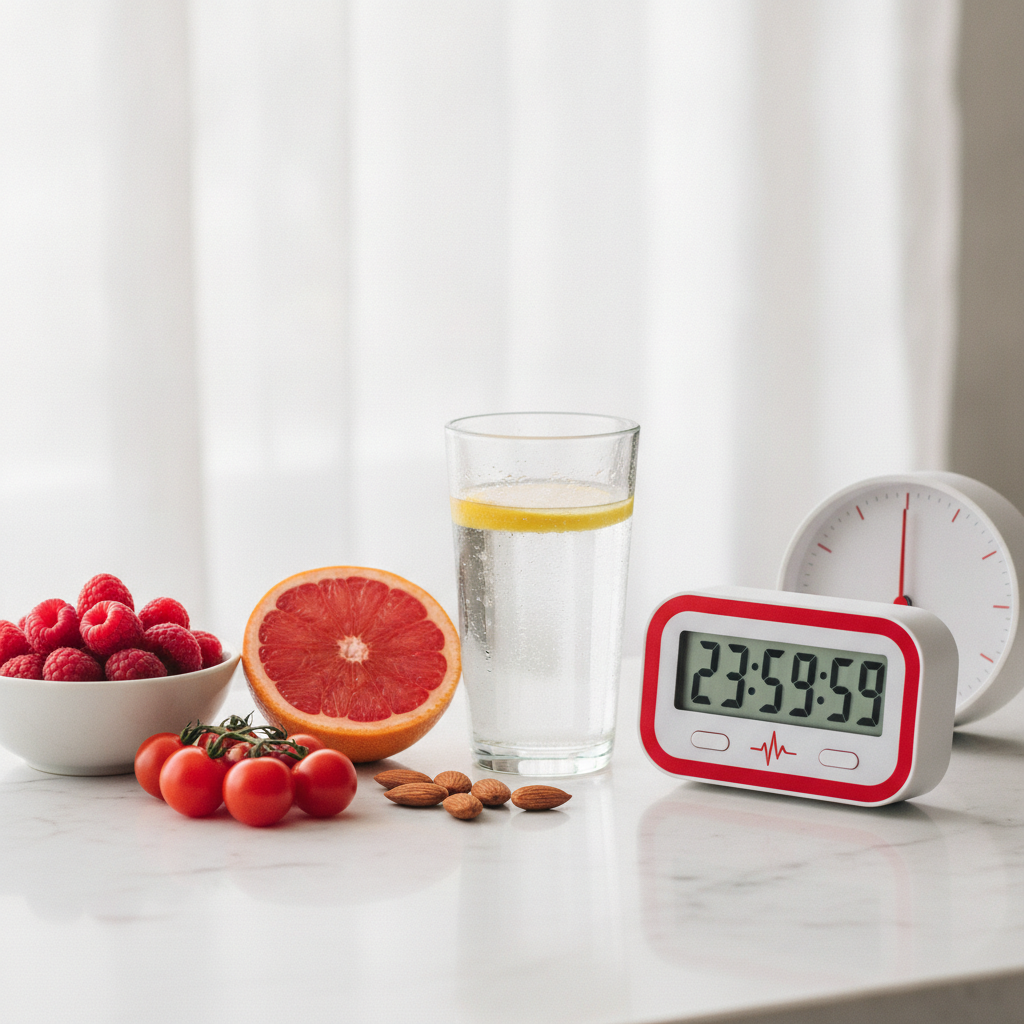
A 24 hour fast is exactly what it sounds like: roughly one full day without caloric intake. That clarity is why people try it—and why they also underestimate it. Twenty-four hours is long enough to feel real metabolic and psychological pressure, yet short enough that many healthy adults can complete it with planning. It is not the same as daily 16 hour fast or 18 hour fast routines. It is a deliberate reset day, not an automatic lifestyle default.
This complete 24-hour fasting guide explains who this protocol suits, how to prepare, what commonly happens across the day, how to break the fast without digestive chaos, and how 24 hour fasting compares with shorter daily windows and longer options like a 36 hour fast.
What a 24 Hour Fast Is—and Is Not
A 24 hour fast typically runs from dinner to dinner or lunch to lunch. Example: finish dinner at 7:00 p.m. Monday and eat again at 7:00 p.m. Tuesday. Water, black coffee, and unsweetened tea are usually allowed. Anything with meaningful calories—juice, milk, bone broth if used as calories, alcohol, chewing caloric gum—ends the fast.
A 24 hour fast is not medical starvation. It is a time-limited abstinence from energy intake. It is also not a requirement for health. Many people achieve durable benefits with repeated 14 hour, 16 hour, or 18 hour daily patterns and never need a full-day fast. Treat the 24 hour fast as an advanced intermittent tool.
People searching for a 24 hour fast to reset body usually want appetite recalibration, digestive rest, a psychological break from food decisions, or a perceived metabolic “clean slate.” Some of those outcomes are plausible. Others are marketing language. Digestion does not need a dramatic purge. Glycogen depletes gradually. Autophagy pathways engage on a continuum rather than flipping at midnight.
Doing a 24 hour fast every day is rarely wise. That pattern borders on chronic underfeeding for many people and can increase muscle loss risk, social friction, and nutrient shortfalls. Occasional use—weekly or less—is the more sensible framing for most non-clinical contexts.
Who Should Consider a 24 Hour Fast
Better candidates include healthy adults already adapted to 16:8 or 18:6, people with a clear goal for an occasional deeper rest day, and individuals who tolerate fasting well without obsessive food thoughts.
Higher-caution groups include anyone with diabetes on glucose-lowering medication, people with a history of eating disorders, pregnant or breastfeeding individuals, underweight people, adolescents, and those with significant medical conditions. For these groups, clinical supervision is not optional commentary—it is safety infrastructure.
If your longest comfortable fast is currently a 14 hour fast, do not leap to twenty-four hours. Progress through 16, then 18 or 20 hour practices until a full day feels like a stretch rather than a shock.
Preparing for Your First 24 Hour Fast
Preparation determines whether the day feels controlled or chaotic.
The two days before: Eat balanced meals with adequate protein, vegetables, and electrolytes through normal food. Avoid extreme low-carb crash diets right before a long fast; some people feel better entering with stable glycogen rather than already depleted. Reduce alcohol. Sleep as well as you can.
Pick the start and end clearly. Lunch-to-lunch often feels easier socially than dinner-to-dinner for people who hate going to bed hungry. Dinner-to-dinner often feels easier for people who dislike fasting through a full workday afternoon. Choose based on your hardest hunger window.
Clear your calendar of unnecessary food traps. Client lunches, tasting events, and “just one bite” environments are friction you do not need on attempt one.
Hydration and electrolytes: Plan water through the day. If you feel lightheaded on longer fasts, discuss sodium strategies with a clinician. Many people add a pinch of salt to water; others use electrolyte products without sugar. Avoid improvising extreme supplement stacks.
Mindset: Expect waves of hunger rather than linear misery. Hunger often peaks and falls. Boredom and habit cues drive many mid-afternoon cravings more than true energy failure.
Track the fast with a timer so you are not negotiating imaginary end times. The Easy Fast app can start your 24 hour countdown, send reminders, and keep history on your device without analytics. Optional food photo analysis via OpenAI or Gemini is available only if you choose it when you eat again.
Hour-by-Hour: What Often Happens During a 24 Hour Fast
Individual responses vary widely. The outline below is a practical map, not a medical guarantee.
Hours 0–4
You have just finished a meal. Blood glucose and insulin are elevated relative to the fasting state. Digestion proceeds. Mentally, this stretch feels easy for most people because satiety is recent.
Hours 4–8
Gastric emptying continues. Hunger may appear around your usual next-meal time. If breakfast is your habit cue, a morning start after dinner will sting here. Distraction, work, and black coffee help more than willpower speeches.
Hours 8–12
Liver glycogen continues to cover much of the energy need, especially if you are resting. Mild fatigue or coldness can appear. This span overlaps familiar 12–16 hour intermittent fasting territory for many practitioners.
Hours 12–16
Fat oxidation typically rises. Some people notice mental clarity; others feel foggy. Irritability is common if caffeine timing is off or sleep was poor. Compared with a routine 16 hour fast, you are now choosing to keep going through the usual eating open.
Hours 16–20
This is often the hardest block for first-timers. Habit, social timing, and true hunger stack. Ketone production may be rising meaningfully depending on prior diet and activity. Light walking can help; max-effort training is usually a bad idea on a first 24 hour attempt.
Hours 20–24
Many people report a second wind or a flat plateau of manageable discomfort. Anticipation of the break-fast meal can either stabilize mood or intensify obsession. Keep the refeeding plan decided in advance so you do not negotiate from hunger.
Safety Signals: When to Stop Early
End the fast and eat if you experience dizziness that does not respond to sitting and fluids, confusion, faintness, chest pain, severe weakness, uncontrolled tremor, vomiting, or panic that feels medically unusual. Fasting is a tool, not a toughness contest.
People with blood sugar disorders should have clinician-approved stop rules and monitoring plans before attempting a 24 hour fast.
Breaking a 24 Hour Fast Without Regret
Refeeding mistakes cause more misery than the fast itself for many beginners.
Start smaller than pride wants. A protein-forward meal with cooked vegetables, some fat, and controlled carbohydrate usually beats a massive greasy feast. Extremely large volumes can cause bloating, reflux, and reactive fatigue.
Chew thoroughly. Eat slowly for twenty minutes. Pause before seconds. Hydrate, but do not drown the meal with huge fluid loads if that bothers your stomach.
Avoid celebrating with alcohol immediately after a long fast. Alcohol on an empty-adapted system hits harder and sabotages recovery sleep.
The next day, return to your normal shorter fasting schedule rather than stacking another long fast. Recovery eating quality matters: prioritize protein, micronutrient density, and sleep.
How 24 Hour Fasting Compares With Other Durations
A daily 16 hour fast builds consistency and lifestyle fit. An 18 hour fast or 20 hour fast intensifies the daily deficit without requiring full-day abstinence. A 24 hour protocol adds psychological and metabolic depth for occasional use.
A 36 hour fast extends into a second night and is substantially more demanding; it is not a casual upgrade. Searches for 36 hour fasting or 48 hour fast autophagy topics reflect curiosity about deeper cellular housekeeping. Autophagy is continuous and context-dependent; longer fasting may amplify related pathways in research settings, but human thresholds are not stopwatch precise. Do not chase autophagy myths by escalating duration recklessly.
For most goals—including weight management—repeatable shorter fasts outperform rare heroic days if those heroic days trigger refeeding chaos.
A Practical Template for Your Next 24 Hour Fast
- Confirm medical appropriateness.
- Adapt to 16:8 for at least two weeks first.
- Choose lunch-to-lunch or dinner-to-dinner.
- Prepare electrolytes, water bottle, black coffee or tea if used.
- Schedule low-demand tasks for the hardest afternoon hours.
- Pre-decide the break-fast meal.
- Start your timer in Easy Fast and protect the end time.
- Break gently, sleep well, resume normal schedule the next day.
- Review: Was hunger manageable? Did refeeding go smoothly? Would monthly or weekly cadence make sense?
If the answer to those review questions is mostly negative, shorten future attempts to a 20 hour fast or return to daily time-restricted eating.
Common Myths About the 24 Hour Fast
Myth: It detoxifies the liver. The liver detoxifies continuously. Fasting changes fuel use; it is not a spa cleanse.
Myth: Muscle melts off after one day. Short fasts with eventual protein refeeding do not automatically destroy lean mass in healthy adults, especially with resistance training in your usual routine. Chronic repeated underfeeding is a different problem.
Myth: You must train hard while fasting for benefits. Training hard on a first 24 hour day is optional bravado. Walking is enough.
Myth: A 24 hour fast every day is optimal. Rarely. Most people need more frequent eating opportunities for nutrients, training, and social life.
Myth: Results appear overnight. Any scale drop often includes glycogen and water. Judge body composition over weeks of overall pattern, not one fast.
Building a Longer-Term Relationship With Extended Fasting
If 24 hour fasting suits you, set frequency intentionally: perhaps once every one to four weeks. Keep daily intermediate fasting as the base layer. Use extended days for psychological reset or planned metabolic rest, not as punishment after weekends.
Watch for warning pattern shifts: increasing anxiety around food, compulsive lengthening of fasts, social withdrawal to protect fasting purity, or using fasts to compensate for binges. Those patterns warrant stepping back and, when needed, professional help.
Pair any extended fasting practice with strength training on fed days, high-protein eating windows, and honest tracking. Duration alone is not a health strategy.
Frequently Asked Questions
Is a 24 hour fast safe?
For many healthy adults with prior intermittent fasting experience, an occasional 24 hour fast can be tolerated. Safety is individual. Medication use, metabolic disease, pregnancy, eating-disorder history, and underweight status change the equation. When in doubt, ask a clinician before your first attempt.
Can I do a 24 hour fast every day?
A 24 hour fast every day is not recommended for most people. It can become chronically restrictive, complicate nutrient intake, and increase relapse risk. Prefer daily 16–18 hour patterns for routine practice and reserve full-day fasts for occasional use.
What should I eat after a 24 hour fast?
Break with a moderate, protein-rich meal that includes vegetables and some carbohydrate if you tolerate it well. Avoid oversized restaurant feasts and heavy alcohol. Eat slowly and stop when comfortably satisfied rather than stuffed.
Will a 24 hour fast to reset body improve autophagy?
Fasting influences cellular recycling pathways, but human autophagy is not a binary switch at hour twenty-four. Lifestyle factors—sleep, protein cycling, overall diet quality, and avoiding constant snacking—matter alongside any single long fast. Avoid escalating to 48 hour protocols solely because of autophagy claims online.
How does a 24 hour fast compare with a 16 hour or 18 hour fast?
A 16 hour or 18 hour fast is easier to live inside daily life. A 24 hour fast is a deeper intermittent challenge with greater hunger variability and refeeding importance. Choose based on goal and tolerance, not prestige.
Can I exercise during a 24 hour fast?
Light walking is usually reasonable. Intense training on a first attempt often worsens dizziness and decision quality. If you are experienced and feel stable, keep intensity conservative and stop for warning symptoms.
What if I feel awful before reaching 24 hours?
Stop and eat. Log what happened—sleep, stress, electrolytes, caffeine, prior diet—and adjust the next attempt. Ending early is information, not failure. Progress from 18 or 20 hours upward when readiness returns.
A 24 hour fast is a precise tool: useful for some, unnecessary for many, and risky when romanticized. Prepare carefully, track the window, break the fast thoughtfully, and keep shorter daily fasting as your foundation. When you want a clean countdown and private history for extended or daily protocols, use Easy Fast to make the clock—and your boundaries—unambiguous.