24hr Fasting Guide: A Practical Protocol You Can Repeat
A practical 24hr fasting protocol covering prep day, timing templates, what to drink, how to break the fast, and how often to schedule full-day fasts.
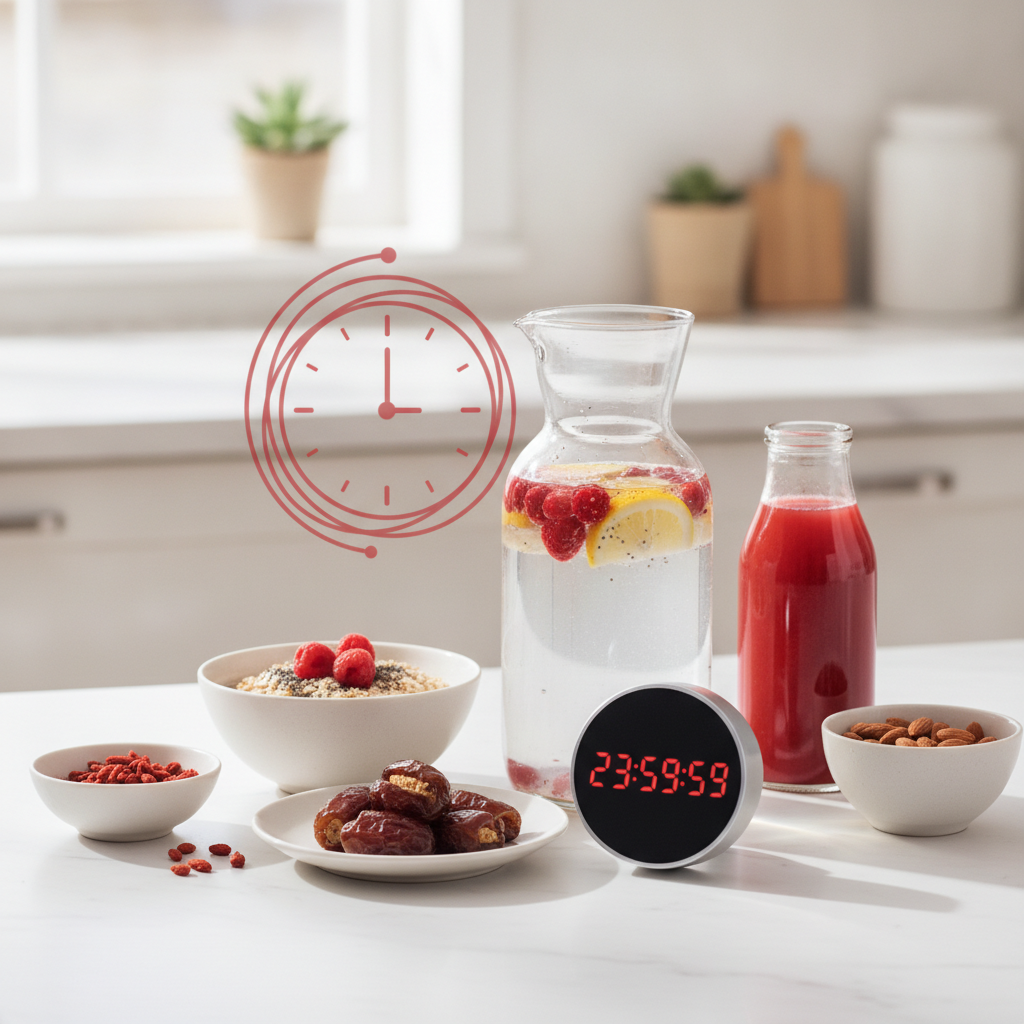
A 24hr fasting protocol is a full day without calories, usually run occasionally rather than daily. Unlike hour-by-hour curiosity guides that narrate every sensation from dawn to dinner, this article focuses on a repeatable operating system: how to schedule the day, prepare the day before, execute without drama, break the fast intelligently, and decide frequency. If you already understand what a twenty-four-hour fast is, you need a playbook you can run on a calm Tuesday next month — not another metaphorical journey essay.
Medical caution belongs up front. Prolonged fasts are inappropriate for many people, including those who are pregnant, underweight, have eating-disorder history, or take medications that require food. When unsure, speak with a clinician who knows your case. This is lifestyle guidance for generally healthy adults, not a prescription.
Protocol Overview: The 24hr Fasting Template
Definition used here: Finish a normal meal at time T, consume no calories until time T + 24 hours, then eat a measured refeed meal. Water is required. Black coffee or plain tea are optional if you tolerate them.
Two common clocks:
- Dinner-to-dinner: Eat Monday 7 p.m., fast until Tuesday 7 p.m.
- Lunch-to-lunch: Eat Saturday 12:30 p.m., fast until Sunday 12:30 p.m.
Dinner-to-dinner often sleeps through the hardest overnight stretch. Lunch-to-lunch can suit people who want an evening social meal on the start day and a daylight refeed.
Weekly fit: Most people should not stack 24hr fasting daily. Use it as an occasional intensifier atop a baseline like 16:8. Frequency examples: once every one to two weeks, or twice monthly, depending on recovery, training, and stress.
Success criteria: You complete the hours, refeed without a binge spiral, sleep acceptably that night, and feel capable of training or working the next day. Weight on the following morning is noisy water data — do not use it as the sole verdict.
Pre-Protocol: The Day Before
Twenty-four-hour outcomes are mostly decided before the fast starts.
Eat a normal, protein-aware final meal, not a punishment low-calorie day and not an all-you-can-eat farewell banquet. Include vegetables and some salt. Extreme carb binges the night before often make the next day feel worse, not better.
Hydrate. Go into the fast with a normal fluid status.
Clear the calendar of needless food traps. Do not schedule restaurant work lunches on the fasting day if you can move them. Shop groceries for the refeed meal in advance so you are not decision-making while depleted.
Tell one accountability person your end time if that helps you. Silent heroics are optional.
Set the timer immediately after the last bite. Ambiguity about start time invents early exits. Easy Fast makes this frictionless: tap start, confirm the twenty-four-hour target, and let on-device tracking handle the clock without an account or cloud profile.
Sleep on time. A short night turns a manageable protocol into an emotional event.
Execution Day: Rules of Engagement
Drink on a schedule. Example: water upon waking, again mid-morning, with electrolytes if you know you need sodium on longer fasts, again afternoon. Do not wait for extreme thirst.
Caffeine cap. If you use coffee, keep it earlier and avoid stacking anxious doses that wreck sleep after the refeed.
Move lightly. Walks help. Hard PR attempts in the gym are usually poor protocol design on a first 24hr fasting day.
Work in blocks. Hunger arrives in waves. Plan demanding tasks for times you typically feel stable, and keep easy admin tasks for predictable hunger peaks.
Avoid food media. Recipe videos during a 24hr fast are optional self-sabotage.
Have an abort rule. Dizzy to the point of unsafe, heart racing abnormally, confusion, or severe unwell feelings means stop and eat, then reassess. Toughness is not a clinical monitoring device.
Stay off the scale obsession loop during the day. Check marks on time completed instead.
If evenings are hardest on dinner-to-dinner protocols, brush teeth, leave the kitchen, and start a low-stimulation wind-down before your scheduled refeed. Knowing the timer hits zero at 7:00 is easier than open-ended white-knuckling.
Breaking the 24hr Fast: Refeed Protocol
The refeed is part of the protocol, not an afterthought.
Start moderate. A bowl of soup plus protein, yogurt and fruit, eggs and toast, or a normal plate that is not a tournament of takeout is a good pattern. Chew slowly. Pause twenty minutes before deciding on seconds.
Include protein and some carbs for most people leaving a full day fast — especially if you train. All-fat refeeds leave many people unsatisfied and can encourage later bingeing.
Avoid celebratory chaos as the default. You can enjoy food without ordering everything on the menu because the timer finished. If social celebration is the point of a rare fast break, plan it deliberately rather than pretending it is accidental.
Resume your baseline schedule the next day. One 24hr fasting day should not require three “cheat days” afterward. That pattern cancels the practice.
Digestive surprise is common if you slam spicy greasy food into an empty gut. Mild discomfort can happen even with careful refeeds; severe pain is a reason to seek care.
Frequency, Progression, and When Not to Repeat
After a successful first protocol, wait and observe for several ordinary days. If sleep, mood, and workouts recover well, you may schedule another 24hr fasting day in a week or two. If recovery is rough, extend the interval or stick with daily time-restricted eating.
Do not progress to multi-day fasts casually because twenty-four hours felt “easy” once. Duration risk rises nonlinearly for unsupervised experiments.
Skip or postpone 24hr fasting during peak illness, peak deadline weeks with poor sleep, new maximum training loads, or emotionally volatile periods when food restriction historically triggers binge-restrict cycles.
Track and Repeat with Easy Fast
A practical protocol depends on timestamps you trust. Easy Fast supports custom durations so a twenty-four-hour target is explicit, reminders can mark the end, and history shows how often you actually run the protocol versus how often you only talk about it. Data remains on your device — private by design — which fits health experiments you may not want synced into marketing clouds.
Log the pre-meal start, complete the day, log the refeed, and add a one-line note in your own journal about difficulty and next-day energy. Over three months you will know your personal cadence better than any generic calendar meme.
Download Easy Fast from the App Store, pick your next dinner-to-dinner slot on a low-stress day, and run the protocol as written: prepare, timer on, light movement, measured refeed, back to baseline. Twenty-four-hour fasting becomes useful when it is scheduled and repeatable, not when it is a spontaneous punishment after a weekend of overeating.
Use 24hr fasting as a deliberate tool beside a sustainable daily window. That combination — ordinary consistency plus occasional longer resets — is how people keep the practice for years without turning their entire personality into a fasting brand.
If a protocol consistently worsens anxiety around food, stop and reset with gentler structure. Fasting should organize appetite, not become the center of your self-worth. Sustainable timing habits beat dramatic episodes. Stay curious, stay cautious, and prefer repeatable routines over one-off heroics that you cannot schedule again next month.
Keep tools minimal. A private timer, a water bottle, and a protein-forward first meal cover most practical needs. Extra gadgets are optional hobbies, not prerequisites for a successful morning or twenty-four-hour protocol. Stay curious, stay cautious, and prefer repeatable routines over one-off heroics that you cannot schedule again next month.
Build margin into ambitious days rather than assuming perfect conditions. Keep electrolytes and water available, protect sleep the night before a harder fast, and decide your break-fast meal in advance so hunger does not choose for you at the finish line. Stay curious, stay cautious, and prefer repeatable routines over one-off heroics that you cannot schedule again next month.
Return to daily time-restricted eating as your baseline between harder experiments. Ordinary 16:8 weeks maintain skill and metabolic familiarity so occasional longer fasts feel less shocking when you choose them deliberately. Stay curious, stay cautious, and prefer repeatable routines over one-off heroics that you cannot schedule again next month.
Build margin into ambitious days rather than assuming perfect conditions. Keep electrolytes and water available, protect sleep the night before a harder fast, and decide your break-fast meal in advance so hunger does not choose for you at the finish line. Stay curious, stay cautious, and prefer repeatable routines over one-off heroics that you cannot schedule again next month.
Return to daily time-restricted eating as your baseline between harder experiments. Ordinary 16:8 weeks maintain skill and metabolic familiarity so occasional longer fasts feel less shocking when you choose them deliberately. Stay curious, stay cautious, and prefer repeatable routines over one-off heroics that you cannot schedule again next month.
Build margin into ambitious days rather than assuming perfect conditions. Keep electrolytes and water available, protect sleep the night before a harder fast, and decide your break-fast meal in advance so hunger does not choose for you at the finish line. Stay curious, stay cautious, and prefer repeatable routines over one-off heroics that you cannot schedule again next month.
Return to daily time-restricted eating as your baseline between harder experiments. Ordinary 16:8 weeks maintain skill and metabolic familiarity so occasional longer fasts feel less shocking when you choose them deliberately. Stay curious, stay cautious, and prefer repeatable routines over one-off heroics that you cannot schedule again next month.
Build margin into ambitious days rather than assuming perfect conditions. Keep electrolytes and water available, protect sleep the night before a harder fast, and decide your break-fast meal in advance so hunger does not choose for you at the finish line. Stay curious, stay cautious, and prefer repeatable routines over one-off heroics that you cannot schedule again next month.
Return to daily time-restricted eating as your baseline between harder experiments. Ordinary 16:8 weeks maintain skill and metabolic familiarity so occasional longer fasts feel less shocking when you choose them deliberately. Stay curious, stay cautious, and prefer repeatable routines over one-off heroics that you cannot schedule again next month.
Build margin into ambitious days rather than assuming perfect conditions. Keep electrolytes and water available, protect sleep the night before a harder fast, and decide your break-fast meal in advance so hunger does not choose for you at the finish line. Stay curious, stay cautious, and prefer repeatable routines over one-off heroics that you cannot schedule again next month.
Return to daily time-restricted eating as your baseline between harder experiments. Ordinary 16:8 weeks maintain skill and metabolic familiarity so occasional longer fasts feel less shocking when you choose them deliberately. Stay curious, stay cautious, and prefer repeatable routines over one-off heroics that you cannot schedule again next month.
Build margin into ambitious days rather than assuming perfect conditions. Keep electrolytes and water available, protect sleep the night before a harder fast, and decide your break-fast meal in advance so hunger does not choose for you at the finish line. Stay curious, stay cautious, and prefer repeatable routines over one-off heroics that you cannot schedule again next month.
Frequently Asked Questions
What is 24hr fasting?
It is going about twenty-four hours without caloric intake, typically from one meal to the same meal the next day, while drinking water and optionally plain coffee or tea.
How often should I do a 24hr fast?
Many people start with once every one to two weeks or less, depending on recovery. It should not automatically replace a sustainable daily schedule like 16:8.
What can I drink during 24hr fasting?
Water is essential. Electrolytes can help some adults. Black coffee and unsweetened tea are common options. Caloric drinks end the fast.
How do I break a 24hr fast safely?
Eat a moderate meal with protein and easy-to-digest sides, go slowly, and avoid an immediate massive junk binge. Resume normal structured eating the following day.
Is 24hr fasting better than 16:8?
They solve different jobs. 16:8 is a daily rhythm. 24hr fasting is an occasional longer protocol. Most people benefit more from mastering daily consistency first.
Can I exercise during a 24hr fast?
Light walking is usually reasonable. Intense training is optional risk, especially on early attempts. Listen to performance and safety, not bravado.
How do I track a 24hr fasting protocol?
Set a custom twenty-four-hour timer at the last meal and review completion in history. Easy Fast keeps that tracking private on your iPhone so you can repeat the protocol with clear start and end times.