Fasting 16:8: How to Start, What to Eat, and Stay Consistent
Master the 16:8 fasting method with a practical daily schedule, meal timing tips, what breaks your fast, and tools to track your 16-hour fasting window.
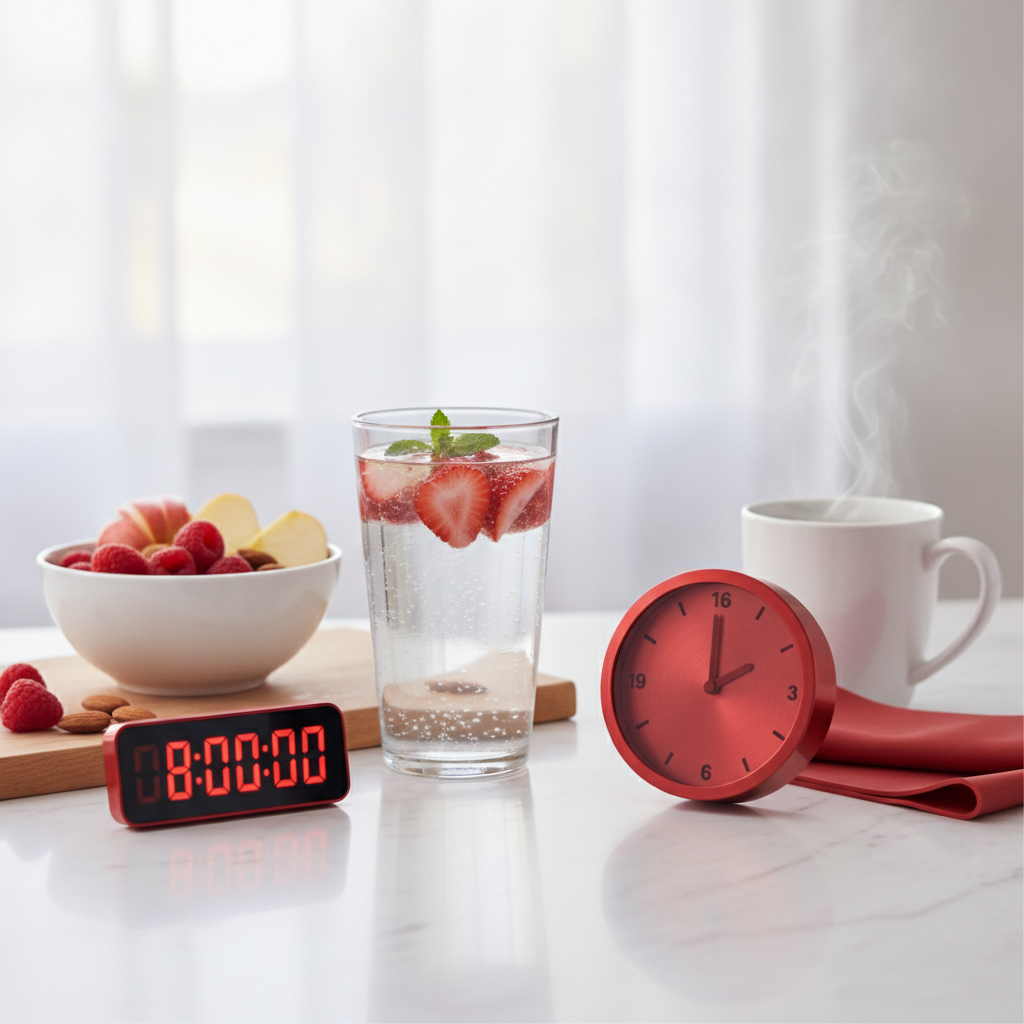
Fasting 16:8 is the most popular intermittent fasting method in the world, and it earns that position for a simple reason: it works for real life. Sixteen hours of fasting and eight hours of eating sounds structured, but in practice most of those sixteen hours pass while you sleep, work, and move through your morning routine. You are not white-knuckling through an entire day without food. You are choosing when to eat and letting your body do what it already knows how to do between meals.
If you searched for fasting 16 8 because you want a clear plan — not another vague wellness article — this guide delivers exactly that. You will learn how to set your eating window, what to consume during fasting and eating hours, how to handle hunger, and how to track your progress so the habit sticks.
What Does Fasting 16:8 Mean?
Fasting 16:8 means you fast for 16 consecutive hours and consume all your calories within an 8-hour eating window. The ratio is fixed; the timing is flexible. You decide whether your window runs from 10 a.m. to 6 p.m., noon to 8 p.m., or 1 p.m. to 9 p.m. The method does not dictate specific foods, calorie targets, or meal frequency within the window.
During the 16-hour fast, your body shifts from using recently digested glucose toward stored glycogen and body fat. Insulin levels fall, which improves fat access and cellular repair processes. During the 8-hour window, you eat normally — ideally with attention to nutrition, but without the obsessive tracking that makes many diets unsustainable.
The 16:8 method is a form of time-restricted eating. It is periodic because you repeat the same cycle every day. It is intermittent because you alternate between fasting and feeding states within each 24-hour period. Whatever terminology you prefer, the mechanics are straightforward: do not eat outside your window.
Why 16:8 Fasting Works for So Many People
Fasting 16:8 succeeds where restrictive diets fail because it changes structure rather than forcing constant deprivation.
It includes sleep. If you finish dinner at 8 p.m. and eat breakfast at noon the next day, you have fasted sixteen hours while sleeping for seven or eight of them. The conscious fasting period is only eight or nine hours — manageable for nearly everyone.
It reduces decision fatigue. Instead of debating snacks at 10 p.m., you have a rule: the kitchen is closed. That clarity eliminates hundreds of micro-decisions per week.
It naturally limits calories. Most people cannot eat an entire day’s worth of food in eight hours if meals are reasonably sized. The compressed window creates a modest caloric deficit without counting calories.
It aligns with circadian biology. Eating earlier in the day and finishing dinner before late evening supports better sleep and blood sugar regulation. A noon-to-8 p.m. or 10 a.m.-to-6 p.m. window often produces better results than eating until midnight.
It scales with experience. Beginners start at 16:8. After adaptation, many progress to 18:6 without changing the fundamental approach. The 16:8 foundation makes progression feel natural rather than punishing.
Choosing Your 16:8 Eating Window
Your eating window should fit your life, not an influencer’s schedule. Here are the most common 16:8 configurations and who each one suits.
Noon to 8 p.m. (Skip Breakfast)
This is the default recommendation for most beginners. You skip breakfast, drink water or black coffee in the morning, eat your first meal at noon, and finish dinner by 8 p.m. Morning exercisers who do not need pre-workout food often thrive on this schedule. Office workers appreciate not thinking about lunch prep until midday.
10 a.m. to 6 p.m. (Early Window)
An early eating window suits people who wake hungry, train in the morning, or prefer finishing dinner before sunset. You eat breakfast at 10 a.m., lunch around 1–2 p.m., and dinner by 6 p.m. The trade-off is no evening snacking, which many people consider a feature rather than a bug.
1 p.m. to 9 p.m. (Late Window)
Night owls and people with late work schedules sometimes prefer a later window. You can have dinner with family at 7 or 8 p.m. and still close the window by 9. The risk is lower sleep quality if you eat too close to bedtime, so monitor how you feel and adjust if needed.
11 a.m. to 7 p.m. (Balanced Middle)
A middle-ground window works well for social flexibility. You can accommodate brunch on weekends by shifting an hour without abandoning the protocol entirely. Consistency across weekdays matters more than perfection on weekends.
Pick one window and hold it for at least two weeks before changing. Your hunger hormones adapt to predictable meal times, making fasting progressively easier.
What to Drink During Your 16-Hour Fast
During the 16-hour fasting period, stick to zero-calorie or near-zero-calorie beverages.
Water is essential. Dehydration triggers hunger signals that feel like true food cravings. Drink consistently throughout the fast.
Black coffee is widely accepted during fasting 16:8. Caffeine may also suppress appetite modestly. Avoid adding sugar, milk, cream, or flavored syrups — those break your fast by stimulating insulin.
Plain tea — green, black, herbal — is fine. Skip sweetened or milky varieties during fasting hours.
Sparkling water with no sweeteners is acceptable. Check labels for hidden calories in flavored versions.
Electrolytes without sugar can help during longer fasts or hot weather. Plain salt in water or sugar-free electrolyte supplements are options for people who experience headaches.
What breaks a fast: anything with meaningful calories. That includes juice, soda, bone broth with fat, bulletproof coffee with butter and oil, and “just a bite” of food. If you are practicing fasting 16:8 for metabolic benefits, keep the fasting window clean.
What to Eat During Your 8-Hour Window
Fasting 16:8 does not license poor food choices during eating hours. What you eat determines whether you lose fat, maintain muscle, and feel energized or sluggish.
Prioritize protein at every meal. Chicken, fish, eggs, Greek yogurt, legumes, and tofu increase satiety and preserve muscle mass. Aim for at least 25–40 grams of protein per meal depending on your size and activity level.
Fill half your plate with vegetables. Fiber supports digestion, micronutrient intake, and fullness. Leafy greens, cruciferous vegetables, peppers, and tomatoes add volume without excessive calories.
Include healthy fats in moderation. Olive oil, avocado, nuts, and seeds support hormone production and satisfaction. Fats are calorie-dense, so portion awareness matters.
Choose complex carbohydrates. Whole grains, sweet potatoes, and fruit provide sustained energy. Refined carbs and sugar cause spikes and crashes that make the next fast harder.
Meal frequency is flexible. Some people eat two large meals within eight hours. Others prefer three smaller meals. Both approaches work. Total nutrition across the window matters more than meal count.
A sample day on fasting 16:8 with a noon-to-8 p.m. window:
- Noon: Grilled chicken salad with olive oil, quinoa, and mixed vegetables
- 3:30 p.m.: Greek yogurt with berries and a handful of almonds
- 7 p.m.: Salmon, roasted broccoli, and sweet potato
Adjust portions to your energy needs and goals.
How to Start Fasting 16:8 This Week
Do not wait for the perfect Monday. Start with these steps today.
Step 1: Choose your window. Based on the section above, pick an 8-hour block that fits your schedule for the next 14 days.
Step 2: Calculate your last meal tonight. If your window opens at noon tomorrow, finish eating by 8 p.m. tonight. That begins your first 16-hour fast.
Step 3: Set a reminder. Use a fasting tracker to alert you when your eating window opens and closes. The Easy Fast app starts your 16:8 fast with one tap and shows elapsed time clearly on your iPhone.
Step 4: Plan your first meal. Have ingredients ready for a satisfying, protein-rich meal when your window opens. Arriving hungry without a plan leads to poor choices.
Step 5: Expect adaptation. Days one through five may feel challenging. By day seven to fourteen, hunger at former breakfast time typically fades. Your body learns the schedule.
If 16 hours feels too long initially, start with 14:10 for one week, then add 30 minutes to the fast every few days until you reach 16:8.
Handling Hunger, Social Events, and Slip-Ups
Hunger during fasting 16:8 is normal, especially in the first two weeks. Mild to moderate hunger is expected. Debilitating dizziness, shaking, or inability to concentrate suggests you need to eat sooner or adjust your schedule.
For mild hunger: Drink water, take a short walk, or have black coffee. Hunger waves often pass within 15–20 minutes.
For social events: Shift your eating window for that day rather than abandoning the protocol. A dinner party at 7:30 p.m. might mean a 2 p.m. to 10 p.m. window temporarily. Return to your standard schedule the next day.
For slip-ups: If you eat outside your window, do not treat it as failure. End the eating episode, restart your fast, and continue. One off-plan meal does not erase weeks of consistency.
For exercise: Light cardio during fasting hours is fine for most people. Intense lifting or HIIT may feel better after your first meal. Experiment and adjust.
Tracking Your 16:8 Fasting Progress
What gets measured gets maintained. Tracking fasting 16:8 reveals patterns that intuition misses.
Log your fast start and end times daily. After two weeks, review your average fasting duration — are you consistently hitting 16 hours or cutting fasts short on stressful days? Notice correlations between sleep, stress, and adherence.
A dedicated fasting timer eliminates manual calculation. Easy Fast stores your history locally on your device, displays trend charts over weeks, and sends reminders when your eating window approaches. No account required, no data collection — just a clear record of your 16:8 practice.
Beyond the timer, track how you feel: energy levels, sleep quality, workout performance, and how clothes fit. The scale is one data point, not the whole story.
Common 16:8 Fasting Mistakes
Eating too much during the window. Eight hours is not unlimited time. Overeating processed food cancels the caloric benefit of fasting.
Breaking the fast with cream coffee. Small additions add up and trigger insulin. Keep fasting hours clean.
Changing windows daily. Your body adapts to rhythm. Flip-flopping between morning and evening windows prevents adaptation.
Skipping protein. Without adequate protein, 16:8 can produce weight loss that includes muscle. Protect lean mass with every meal.
Giving up during week one. Adaptation takes time. Most people who quit fasting 16:8 leave before the habit becomes easy.
Frequently Asked Questions
How many hours is fasting 16:8?
Fasting 16:8 means 16 hours of fasting and 8 hours of eating each day. The 16-hour fast and 8-hour eating window add up to 24 hours, repeated daily.
Can I drink water during 16:8 fasting?
Yes. Water is encouraged during the 16-hour fasting period. Staying hydrated reduces false hunger and supports overall health. Black coffee and plain tea are also generally acceptable.
Does fasting 16:8 work for weight loss?
Yes. Fasting 16:8 often produces weight loss by reducing eating opportunities and creating a modest caloric deficit. Results depend on what you eat during the 8-hour window, your activity level, and consistency over weeks and months.
What is the best time to start fasting 16:8?
The best time is after your last meal of the day. If you finish dinner at 8 p.m., your fast runs until noon the next day. Choose an eating window that fits your work, family, and sleep schedule rather than copying someone else’s timing.
Can beginners do fasting 16:8?
Absolutely. Fasting 16:8 is the most recommended beginner protocol because it includes sleep hours in the fast and does not require calorie counting. Start with 14:10 if 16 hours feels too long, then progress to full 16:8 within one to two weeks.
What breaks a 16:8 fast?
Caloric food and beverages break a fast — meals, snacks, sugary drinks, milk in coffee, juice, and alcohol. Black coffee, plain tea, and water do not break a 16:8 fast for most metabolic purposes.
How long until 16:8 fasting feels easy?
Most people adapt within 7 to 14 days. Hunger hormones align with your new meal schedule, and the routine becomes automatic. Consistency during the first two weeks is the strongest predictor of long-term success.
Fasting 16:8 is not complicated. Pick your eight-hour window, fast cleanly for sixteen hours, eat well when you eat, and track your consistency. With a simple tool like Easy Fast on your phone and two weeks of patience, fasting 16:8 becomes a normal part of your day — not a daily struggle.