Morning Fasting Guide: How to Fast Through the Morning Hours
Morning fasting tips for delaying breakfast, handling hunger at work, choosing coffee rules, and building an eating window that starts later in the day.
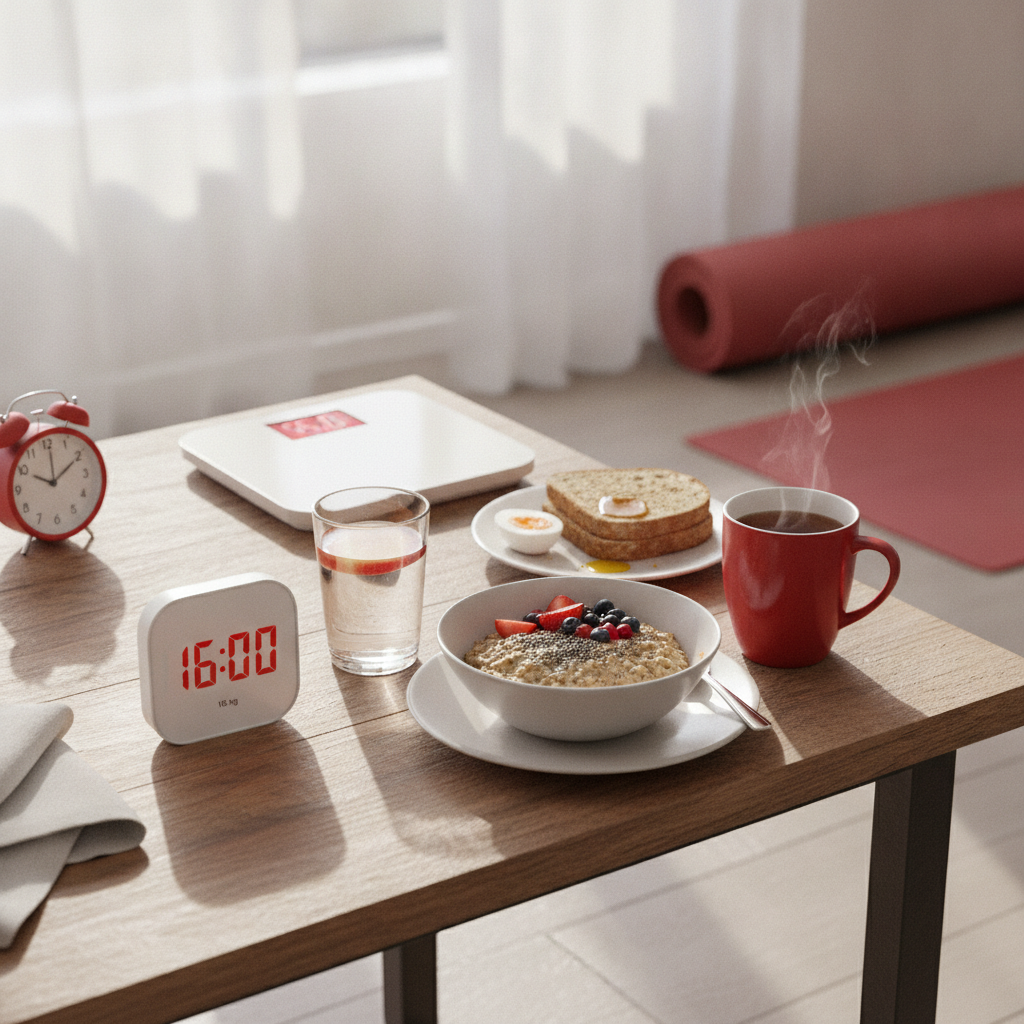
Morning fasting is the practice of extending the overnight fast through the morning hours so your first meal lands closer to midday or afternoon. For many people it is simply the front half of a 16:8 schedule. For others it is a targeted habit: skip the early kitchen chaos, stay focused until lunch, and keep evenings for a solid dinner with family.
If you searched for morning fasting, you likely want tactics for hunger between 8 and 11 a.m., coffee decisions, workout timing, and whether skipping breakfast is “bad.” This guide stays practical. It assumes most adults can safely delay breakfast if they are not in excluded medical groups, and it emphasizes experimentation over dogma.
Why Morning Fasting Is Popular
Mornings already contain unpaid fasting time from sleep. Extending that stretch is often easier than skipping dinner when social life concentrates at night. Morning fasting also removes a decision cluster: no breakfast prep, no desk pastry default, no 10 a.m. sugar crash from a pastry-and-latte opener.
Some people report clearer focus while fasted in the morning — partly caffeine, partly the absence of a heavy early meal. Others feel better eating earlier and fasting later. Morning fasting is a preference match, not a universal destiny.
From a caloric perspective, removing an automatic breakfast can reduce daily intake if lunch and dinner do not balloon to compensate. From a circadian perspective, some research on time-restricted eating suggests earlier eating windows can be metabolically advantageous for certain outcomes, which means aggressive late-only schedules are not automatically superior. If morning fasting pushes all calories late into the night, watch sleep and reflux.
How to Set Up a Morning Fast Schedule
Anchor to your last meal. If dinner ends at 7:30 p.m., a noon first meal yields about 16.5 hours. If dinner ends at 9 p.m., noon yields 15 hours — still a solid morning fast.
Choose a first-meal time you can defend on ordinary workdays. 11 a.m., noon, and 1 p.m. are common. Mark it on a timer so the morning is not an endless negotiation.
Front-load fluids. Drink water soon after waking. Many morning fasting struggles are thirst plus habit, not emergency fuel need.
Place caffeine intentionally. If coffee on an empty stomach makes you jittery, delay it ninety minutes or drink it with a large water chaser. If black coffee is intolerable, decide whether a dirty-fast splash is allowed on your personal rules.
Align workouts. Easy walks suit fasted mornings. High-intensity sessions may want placement after the first meal, especially while adapting.
Keep evenings sustainable. Morning fasting fails when dinner becomes an unbound feast until midnight. Set an end time as carefully as you set a start time.
A sample day: wake 6:30; water; coffee at 7:30; work block; short walk at 10:30; meal one at 12:00 with protein and produce; meal two at 6:30; kitchen closed 7:30; timer running overnight.
Handling Morning Hunger and Habit Cues
Hunger hormones and habit cues both peak when you usually eat. For the first one to two weeks of morning fasting, expect waves — especially at your old breakfast time. Waves often pass in twenty minutes if you change context: leave the kitchen, walk, shower, start a focused task.
Practical dampeners without breaking the fast: sparkling water, mint tea, brushing teeth, and checking your timer for remaining time. Seeing “three hours left” is less vague than “somehow make it to lunch.”
If headaches appear, check hydration and sodium. If dizziness or weakness is significant, eat and reassess whether a shorter delay is wiser. Morning fasting should feel challenging in a trainable way, not medically alarming.
Workplace bagels are environmental warfare. Bring an alternate ritual: tea mug, gum if it fits your rules, or a meeting walk. Tell colleagues once, calmly, that you eat at noon. Most people stop offering after a clear answer.
Breakfast Myths and Morning Fasting
Skipping breakfast is not automatically unhealthy for adults who eat well later and feel good. Historical “most important meal” messaging mixed with cereal marketing more than immutable biology. That said, breakfast can be an excellent meal for people who train early, who dislike large dinners, or who feel better with morning protein.
Morning fasting is optional. If delayed eating worsens binge risk, anxiety, or menstrual symptoms for you, choose an earlier window. The right schedule is the one that improves your week, not the one that wins a purity contest.
Children, teens, pregnant people, and those with specific medical needs should follow individualized guidance rather than adult intermittent fasting trends.
Training, Work Performance, and Morning Fasts
Knowledge workers often like morning fasting because deep work blocks pair well with no meal breaks. Still, monitor afternoon crashes. Sometimes the issue is low protein at meal one, not the fast itself. Make the first meal substantial.
Strength athletes should watch performance notes for two weeks. Some lift well fasted; others need carbs and protein beforehand. Hybrid approach: fasted mornings on rest days; earlier fuel on heavy squat days.
Endurance athletes doing long fasted sessions should be cautious about intensity and heat, and should know the difference between adaptive discomfort and bonking. Mid-session fuel is not a moral failure during demanding training.
Track Morning Fasts with Easy Fast
Morning fasting is psychologically easier when noon is a visible destination. The Easy Fast app starts with one tap after your last evening calorie, shows progress through the morning, and can remind you when the window opens. History lives on your device for privacy — no account required — so your routine data stays local.
Use Easy Fast for fourteen mornings before judging the habit. Look at completion streaks and note which weekdays feel hardest. Adjust dinner end time or first meal time based on data rather than a single rough Monday. That is coaching you can give yourself in minutes.
Download Easy Fast, set tomorrow’s first meal alarm through your fasting schedule, and treat the morning as protected focus time instead of a continuous snack negotiation. Morning fasting works when the clock is clear and the first meal is worth waiting for.
Keep protein high at meal one, keep the kitchen closed at night, and keep expectations patient for the adaptation window. Done that way, morning fasting becomes a quiet productivity tool rather than a constant willpower test.
Return to daily time-restricted eating as your baseline between harder experiments. Ordinary 16:8 weeks maintain skill and metabolic familiarity so occasional longer fasts feel less shocking when you choose them deliberately. Stay curious, stay cautious, and prefer repeatable routines over one-off heroics that you cannot schedule again next month.
Build margin into ambitious days rather than assuming perfect conditions. Keep electrolytes and water available, protect sleep the night before a harder fast, and decide your break-fast meal in advance so hunger does not choose for you at the finish line. Stay curious, stay cautious, and prefer repeatable routines over one-off heroics that you cannot schedule again next month.
Return to daily time-restricted eating as your baseline between harder experiments. Ordinary 16:8 weeks maintain skill and metabolic familiarity so occasional longer fasts feel less shocking when you choose them deliberately. Stay curious, stay cautious, and prefer repeatable routines over one-off heroics that you cannot schedule again next month.
Build margin into ambitious days rather than assuming perfect conditions. Keep electrolytes and water available, protect sleep the night before a harder fast, and decide your break-fast meal in advance so hunger does not choose for you at the finish line. Stay curious, stay cautious, and prefer repeatable routines over one-off heroics that you cannot schedule again next month.
Return to daily time-restricted eating as your baseline between harder experiments. Ordinary 16:8 weeks maintain skill and metabolic familiarity so occasional longer fasts feel less shocking when you choose them deliberately. Stay curious, stay cautious, and prefer repeatable routines over one-off heroics that you cannot schedule again next month.
Build margin into ambitious days rather than assuming perfect conditions. Keep electrolytes and water available, protect sleep the night before a harder fast, and decide your break-fast meal in advance so hunger does not choose for you at the finish line. Stay curious, stay cautious, and prefer repeatable routines over one-off heroics that you cannot schedule again next month.
Return to daily time-restricted eating as your baseline between harder experiments. Ordinary 16:8 weeks maintain skill and metabolic familiarity so occasional longer fasts feel less shocking when you choose them deliberately. Stay curious, stay cautious, and prefer repeatable routines over one-off heroics that you cannot schedule again next month.
Build margin into ambitious days rather than assuming perfect conditions. Keep electrolytes and water available, protect sleep the night before a harder fast, and decide your break-fast meal in advance so hunger does not choose for you at the finish line. Stay curious, stay cautious, and prefer repeatable routines over one-off heroics that you cannot schedule again next month.
Return to daily time-restricted eating as your baseline between harder experiments. Ordinary 16:8 weeks maintain skill and metabolic familiarity so occasional longer fasts feel less shocking when you choose them deliberately. Stay curious, stay cautious, and prefer repeatable routines over one-off heroics that you cannot schedule again next month.
Build margin into ambitious days rather than assuming perfect conditions. Keep electrolytes and water available, protect sleep the night before a harder fast, and decide your break-fast meal in advance so hunger does not choose for you at the finish line. Stay curious, stay cautious, and prefer repeatable routines over one-off heroics that you cannot schedule again next month.
Return to daily time-restricted eating as your baseline between harder experiments. Ordinary 16:8 weeks maintain skill and metabolic familiarity so occasional longer fasts feel less shocking when you choose them deliberately. Stay curious, stay cautious, and prefer repeatable routines over one-off heroics that you cannot schedule again next month.
Build margin into ambitious days rather than assuming perfect conditions. Keep electrolytes and water available, protect sleep the night before a harder fast, and decide your break-fast meal in advance so hunger does not choose for you at the finish line. Stay curious, stay cautious, and prefer repeatable routines over one-off heroics that you cannot schedule again next month.
Return to daily time-restricted eating as your baseline between harder experiments. Ordinary 16:8 weeks maintain skill and metabolic familiarity so occasional longer fasts feel less shocking when you choose them deliberately. Stay curious, stay cautious, and prefer repeatable routines over one-off heroics that you cannot schedule again next month.
Build margin into ambitious days rather than assuming perfect conditions. Keep electrolytes and water available, protect sleep the night before a harder fast, and decide your break-fast meal in advance so hunger does not choose for you at the finish line. Stay curious, stay cautious, and prefer repeatable routines over one-off heroics that you cannot schedule again next month.
Frequently Asked Questions
Is morning fasting the same as skipping breakfast?
Often yes in practice. Morning fasting usually means delaying the first meal until late morning or midday as part of a defined eating window, not randomly starving without a plan for later nutrition.
Can I drink coffee while morning fasting?
Black coffee is commonly included. Caloric drinks break a clean fast. Choose your rule and keep it consistent across weekdays so results are interpretable.
Will morning fasting slow my metabolism?
Short-term delayed breakfast in healthy adults does not typically “damage” metabolism in the way old myths claimed. Severe chronic under-eating is a different problem. Eat enough inside your window.
What should I eat to break a morning fast?
A protein-forward meal with produce and appropriate carbohydrates works well for most people. Avoid breaking only with sweets, which can spike hunger and energy swings.
Is morning fasting good for weight loss?
It can help by reducing eating hours and automated breakfast calories if later meals stay controlled. Weight outcomes still depend on overall intake and consistency across the week, including weekends.
What if I work out early in the morning?
Try easy sessions fasted and fuel sooner on intense days. Track performance for two weeks each way. There is no single correct rule for every sport and person.
How do I stay accountable to morning fasting?
Use a timer with reminders and history. Easy Fast keeps schedules and progress on your iPhone privately so you can see completed mornings accumulate without cloud tracking of your health habits.